Blog

  • Urgent Call for a New Regulatory Framework in the Digital Finance Revolution

    Urgent Call for a New Regulatory Framework in the Digital Finance Revolution

    The Ghana’s financial sector has undergone a significant transformation due to advancements in digital technology.

    Recently, financial sector providers like banks have recognized that embracing digital change is both crucial and necessary. This shift has greatly affected various aspects of financial services sector, including customer interaction and operational procedures.

    Digital transformation (DT) involves the integration of various FinTech solutions to automate, improve, and digitalize processes while enhancing data security.

    In financial services sector, digital transformation entails the extensive incorporation of digital technology, data analysis, and a focus on customer needs to fundamentally alter traditional banking practices and services.

    Financial service providers including banks now typically provide comprehensive services via mobile phones, tablets, and other internet-connected devices. The use of technologies like artificial intelligence, blockchain, cloud services, and mobile apps has led to better operational efficiency, increased customer satisfaction, and sustained competitiveness in the financial market.

    Today in Ghana, financial service providers offer services that are accessible 24/7 without the need for paper, physical branches, or signatures, allowing customers to conduct financial transactions at any time, even on bank holidays.

    The history of financial inclusion in Ghana has been digitalization. The digital finance revolution which started in the early 2000s has shown that the future of financial inclusion is digital. Digital financial services in Ghana’s financial sector began in 1997 with the introduction of Sika Card by the then Social Security Bank allowing cashless transactions.

    In 2007, Bank of Ghana, established the Ghana Interbank Payments and Settlement System (GHIPSS) to bring all the various aspects of the payments system infrastructure (the national switch, smartcard, cheque clearing, central securities depository, real time gross settlement and automated clearing house) under a single entity. In 2008 the Bank of Ghana launched the ‘e-Zwich system, an interoperable payment system for banks and savings and loans companies.

    The e-Zwich was a bio-metric smart card payment system. The Bank of Ghana has completed its Central Bank Digital Currency (CBDC) pilot project in a sandbox environment. The pilot project tested the feasibility of the issuance and acceptance of a digital form of the Ghana Cedi called the e-Cedi.

    This was in line with the commitment made by the Bank in November 2019 to explore CBDC in furtherance of Ghana’s digital transformation agenda. Significantly, the e-Cedi is expected to drive financial inclusion, serve as a digital complement to cash and enhance the overall efficiency of payments. In Digital technology has made it possible for unbanked adults to open a bank account using their mobile phone without visiting a bank branch. In the future, more financial services will be embedded into digital devices, or mobile phones, to enable people perform basic transactions such as buying and selling on e-commerce platforms.

    Also, in the future, Fintech players will increase their alliance with banks in order to find an easier way for unbanked adults to access digital payments and financial services such as personal loans and mortgage loans which can help them improve their welfare and livelihoods.

    Three major forces will change financial inclusion in the future. They are 1) technological developments, 2) the growing demand for personalized financial services, and 3) the need to make profit from consumer data.

    At the heart of innovations churned out by fintech companies and financial institutions are payment services; and at the forefront of financial inclusion in Ghana is the mobile money revolution, which became operational in the country in the last decade and has paved way for other innovative payment solutions. Services like MTN Mobile Money have propelled the nation to the forefront of mobile banking adoption.

    These platforms allow users to perform financial transactions using basic mobile phones, transcending geographic barriers and enabling rural populations to access banking services with ease.

    The Bank of Ghana’s economic and financial data report indicates that as of December 2024, there were 59.7 million registered mobile money accounts in Ghana, highlighting the widespread adoption and impact of mobile money services in the country.

    This represents a significant portion of the population, with approximately 59.7% of individuals aged 15 and older actively using mobile money services. This widespread usage underscores the vital role mobile money plays in everyday transactions and financial inclusion in Ghana.

    According to Bank of Ghana report (2025) an overview of the country’s evolving digital finance landscape, over 97% of digital transaction volumes and 72% of transaction value are now processed through mobile money platforms, while traditional bank digital channels account for less than 1% of volume.

    According to that report more than four million Ghanaians have accessed unsecured mobile loans, often beyond the reach of traditional financial institutions.


    1. The key drivers that are reshaping Ghana’s digital financial landscape

    • Mobile Money

      :

    At the heart of innovations churned out by fintech companies and financial institutions are payment services; and at the forefront of financial inclusion in Ghana is the mobile money revolution, which became operational in the country in the last decade and has paved way for other innovative payment solutions.

    Services like MTN Mobile Money have propelled the nation to the forefront of mobile banking adoption. These platforms allow users to perform financial transactions using basic mobile phones, transcending geographic barriers and enabling rural populations to access banking services with ease.

    The Bank of Ghana’s economic and financial data report indicates that as of December 2024, there were 59.7 million registered mobile money accounts in Ghana, highlighting the widespread adoption and impact of mobile money services in the country. This represents a significant portion of the population, with approximately 59.7% of individuals aged 15 and older actively using mobile money services. This widespread usage underscores the vital role mobile money plays in everyday transactions and financial inclusion in Ghana.


    • Digital Payment Solutions

      :

    Equally, digital payment platforms like ZeePay, Slydepay and ExpressPay have emerged as game-changers in Ghana, providing users with secure and convenient ways to make payments and conduct transactions.

    These platforms offer flexible payment options for utility bills and online shopping to peer-to-peer transfers. Their user-friendly interfaces have made them essential tools for promoting cashless transactions, not only in Ghana but across the globe.


    • Peer-to-Peer Lending Platforms

      :

    Peer-to-Peer lending platforms are reshaping the lending landscapes, particularly for small businesses and entrepreneurs in Ghana. One of the most compelling outcomes of this innovation is the democratisation of access to credit.

    Small businesses and entrepreneurs, who often face challenges in obtaining loans from traditional banks due to stringent eligibility criteria and other mandatory processes, can now benefit from a more inclusive lending environment. By connecting borrowers directly with investors, these platforms streamline lending processes and bridge the gap between borrowers and lenders.


    • Biometric Identification Systems

      :

    Innovations in biometric identification are revolutionising access to financial services. In Ghana, introduction of the Ghana Card – a biometric identification system – is enabling individuals to verify their identity securely and access financial services more easily. Biometric technology enhances security, reduces fraud and simplifies authentication processes, particularly in regions where traditional identification methods may be lacking

    .


    1. Challenges and benefits of the digital era for financial regulation in Ghana

    Globally, regulators and supervisors are facing an enormous challenge: how to deal with digital innovation in financial sector space. There four main short-term challenges are establishing level playing field, data privacy, creating regulatory sandboxes and guaranteeing cyber-security.

    A level playing field should ensure fair competition between banks and the rest of the providers of financial services (such as fintech startups and the “techfins,” the digital giants). On the other hand,

    sandboxes

    seem to be a feasible alternative for allowing institutions to try out new digital value propositions with real customers in a secure testing environment.

    And in third place,

    cyber-security

    , where international cooperation is essential, because of the economic or geopolitical impact of online attacks. A lack of cybersecurity can create a lack of confidence in the safety and security of digital technologies – even though these offer substantial benefits\xa0– and by extension, in the stability of the financial system. Data privacy challenges abound but there are remedies.

    Data privacy exposures, commonly referred to as data security incidents, are critical business concerns. Data incidents can result in consumer identity theft, profiling, censorship, surveillance, harassment, discrimination, exploitation and fraud. \xa0Without appropriate data privacy as well as conduct and prudential regulation and supervision, these risks can increase the likelihood of consumer harm, erode market integrity, adversely impact financial safety and soundness, and may potentially, threaten financial stability.

    Importantly, a higher likelihood of such risks can erode trust in digital financial services and inhibit the generation and sharing of data by individuals and firms, which is the foundation on which the process of fintech innovation is built, thereby constraining efficiencies and inclusive growth.

    As regards

    efficiency,

    the benefits of digital transformation are noted in automation, disintermediation with technologies such as

    blockchain

    , greater flexibility and scalability of technological infrastructures, growing competition and lower costs.

    For financial stability, the digital era poses the challenge of managing the new technological risks, the relationship with new suppliers, the increased pressure on the profitability of banks and growing volatility. At the same time, these transformations have clearly positive impacts, as they promote a more diverse ecosystem and new tools arise to manage the risks.

    From the point of view of consumer protection, the new technologies suppose a tremendous improvement, since they put the consumer at the center of decisions, improve control and traceability of the interactions with customers, and give them greater independence. On the other hand, theyº pose

    ne

    w security risks and data protection issues, especially insofar as the new players enter the market with rules that are more lax.

    As for the integrity of the sector (especially as it relates to the struggle against money laundering), digital disruption supposes a better system for following and analyzing transactions. But it also raises doubts about issues such as virtual currencies and payment systems

    ,

    apart from the digital authentication of customers


    1. The


      need for a Regulatory Paradigm Shift


      in the Digital Financial Landscape

    A regulatory paradigm shift entails moving away from the current rigid, rule-based approaches towards more principles-based, risk-focused, and technology-neutral frameworks. This involves on principle-based regulation where it focuses on outcomes and objectives rather than on current practices on prescribed on specific methods not allowing for innovation while mitigating risks. In addition to the principled based regulation, risk based approach will prioritize regulatory attention and resources – based on the potential impact of digital finance activities on country financial stability and consumer protection.

    Principle based regulation will ensure technology neutrality. Regulating activities rather than specific technologies, ensuring that regulations apply equally to traditional and digital financial services. The principle based regulation foster closer cooperation between regulators, industry participants and technology providers to stay ahead of emerging risks and emerging opportunities. Principle-based regulation have the ability to develop robust regulations to protect sensitive financial data and ensure the security of digital financial systems

    There is a growing need for a regulatory paradigm shift in the face of digital finance in Ghana. Traditional regulatory frameworks often struggle to keep pace with the rapid innovation and evolving landscape of digital finance, necessitating a move towards more flexible, adaptive, and technology-neutral approaches.

    Digital finance, encompassing technologies like fintech, blockchain, and digital currencies, presents both opportunities and challenges for regulators. While these innovations can enhance financial inclusion, promote efficiency, and reduce costs, they also introduce new risks related to cyber-security, data privacy, consumer protection, and financial stability.

    Current regulatory landscape of traditional financial regulations are often designed for established institutions and products, lacking the agility to address the unique characteristics of digital finance. Existing regulations may not be suitable for decentralized platforms, peer-to-peer lending, or crypto-currencies, leading to regulatory gaps and uncertainties

    The rapid advancement of financial technology (FinTech) has presented both unprecedented opportunities and challenges for the financial sector regulators. As FinTech innovations reshape financial services, regulatory bodies like Bank of Ghana face the challenge of designing adaptable frameworks to address emerging risks, particularly those related to fraud prevention.

    The growing diversity of financial services providers and business models often requires expanding the regulatory perimeter. Payments, loans, and deposit taking services may be provided by specialized payment service providers (fintechs), e-commerce platforms (big techs), and other non-banks. It is therefore important that regulators develop approaches to ensure a level playing field and provide clear requirements for licensing. Regulatory shifts in digital finance in future will require that Bank of Ghana and other financial regulators move towards creating frameworks that support innovation while managing risks, rather than trying to prevent it.

    Regulatory paradigm shifts will require that regulators like Bank of Ghana will need to adopt technology neutrality. The principle of technology neutrality allows for new technologies to be adopted as long as they comply with existing regulations, but this needs to be balanced with consumer protection.

    Regulatory and supervisory policy tools will have to adapt. Existing Bank of Ghana regulatory perimeters may not adequately cover emerging providers of financial services, and new players may pose challenges for day-to-day financial supervision.

    Central banks including Bank of Ghana worldwide struggle to deal with regulatory challenges, especially the impact of technological innovations on the financial system. Financial Technology (FinTech) innovations generally occur ahead of regulations; therefore, critical challenges for central banks, including the Bank of Ghana, is how to stay ahead of these innovations and frame supervisory mechanisms to suit the FinTech space. Understanding this problem is crucial because the central bank’s regulations can hurt or support the rapid adoption of FinTech in Ghana. The Bank of Ghana will require regulatory shift to deal with massive innovation in digital finance over the past decade.

    Bank of Ghana’s regulatory sandbox is a controlled environment where companies can test innovative products or services under a regulator’s supervision, often with relaxed regulatory requirements, for a limited time. It allows for experimentation with new financial technologies (FinTech) or other innovative solutions while minimizing risks to consumers and the broader financial system.

    A regulatory paradigm shifts entails moving away from the current rigid, rule-based approaches towards more principles-based, risk-focused, and technology-neutral frameworks.

    This involves on principle-based regulation where it focuses on outcomes and objectives rather than on current practices on prescribed on specific methods not allowing for innovation while mitigating risks.

    In addition to the principled based regulation, risk based approach will prioritize regulatory attention and resources – based on the potential impact of digital finance activities on country financial stability and consumer protection. Principle based regulation will ensure technology neutrality. Regulating activities rather than specific technologies, ensuring that regulations apply equally to traditional and digital financial services.

    The principle based regulation foster closer cooperation between regulators, industry participants and technology providers to stay ahead of emerging risks and emerging opportunities. Principle-based regulation have the ability to develop robust regulations to protect sensitive financial data and ensure the security of digital financial systems.

    As part of the regulatory paradigm shift, it will be appropriate for Bank of Ghana and other regulators must adopt a new, dynamic regulatory approach to FinTech regulations, which is premised on maintaining a balance between pre-approval culture

    (rule-based supervision

    ) and permissive culture (

    principle-based supervision

    ).

    \xa0

    Rule-based supervision relies on detailed, specific rules to guide and evaluate compliance, while principle-based supervision uses broad principles to guide conduct, allowing for flexibility and innovation in meeting regulatory objectives.

    Both approaches have their strengths and weaknesses, with rule-based approaches often providing clarity but potentially stifling innovation, and principle-based approaches fostering flexibility but potentially lacking clarity.

    Rule-based supervision emphasizes detailed, specific rules and regulations while compliance is achieved by adhering to these specific rules, offers clarity and predictability, reduces ambiguity, and can be easier to enforce in some cases, but remains inflexible, may stifle innovation, and may not address all possible scenarios, leading to loopholes.

    Principle-based supervision emphasizes broad principles and objectives rather than specific rules, while compliance is achieved by demonstrating adherence to the principles, which may involve different approaches for different entities and also allows for flexibility, encourages innovation, and can adapt to new and changing circumstances, but can be ambiguous, requires a strong understanding of the principles, and may be more challenging to enforce. Principle-based supervision often requires a strong and sophisticated supervisory capacity to assess whether entities are genuinely meeting the principles.

    Principle-based approaches may offer better consumer protection in some cases, as regulators can adapt to new risks more quickly and Principle-based approaches also foster innovation, as firms are encouraged to find creative ways to meet regulatory objectives. Bank of Ghana and other regulators in the financial digital space may have to shift from the rule- based regulation to principle- based regulation in order to accommodate the innovation in the digital finance.

    Principles-based regulation, in its broadest sense, refers to a shift away from comprehensive, prescriptive rules and toward using high-level, vaguely expressed guidelines or Principles to establish the standards by which regulated enterprises must operate. Using principles-based regulations allows for easier adaptation to new products and business models, which are constantly evolving in digital finance.

    Principles-based regulation, compared to detailed, rules-based regulation, facilitates adaptation to the rapid evolution of digital finance by focusing on broad, outcome-oriented principles rather than prescriptive rules.

    This flexibility allows regulators to respond effectively to new technologies and business models in the financial sector. Principles can be applied to regulation in two ways. First, legislation can require that principles, expressed in a relatively general way, must be complied with.

    This form of principles-based regulation is often contrasted with rules-based regulation: principles-based regulation focuses on outcomes, whereas rules-based regulation prescribes the format compliance must take..

    Bank of Ghana as the regulator must ensure that Fintech firms in Ghana adopt Reg-Tech solutions to automate compliance processes. Regtech refers to a regulatory technology or Regtech involves new technologies to help regulated financial service providers streamline audit, compliance and risk management and other back office functions to enhance productivity, and overcome regulatory challenges, such as the risks and costs related to regulatory reporting and compliance obligations.

    These technologies streamline reporting and ensure adherence to regulatory requirements. Bank of Ghana should be guided by the principles of innovation and efficiency in its regulatory posture.

    It can follow these principles by investing in RegTech, improving its regulatory sandbox capabilities, and serving as a catalyst to promote FinTech innovation by enabling the interoperability of FinTech infrastructure on access, costs, and quality. Principles-based regulation is more adaptable to evolving technologies and business models because it focuses on desired outcomes rather than specific methods.

    It can be more cost-effective to adapt and update principles-based regulations compared to frequently revising detailed rules, especially as new technologies emerge. This approach can provide firms with greater flexibility in how they achieve regulatory objectives, allowing them to tailor their approach to their specific circumstances and strengths.

    Principles-based regulations can help create a more level playing field for market participants, ensuring that all businesses, regardless of their technology, are treated equally under the law

    A successful regulatory paradigm shifts by Ghanaian financial sector regulators to principle- based approach can lead to increased financial inclusion

    .

    Principle-based regulation could foster innovation and reduce barriers to entry, digital finance can expand access to financial services for underserved populations.

    Digital technologies can streamline financial processes, lower transaction costs, and improve access to financial products and services.\xa0Furthermore, principle based regulation could foster greater consumer protection, can also provide clear and effective regulations that can protect consumers from fraud, data breaches, and other risks associated with digital finance.\xa0A well-designed regulatory framework such the principle based regulation can mitigate the potential risks of digital finance to the overall financial system

    In countries like United Kingdom and Indonesia, principle-based regulation is able to respond the financial innovation in the digital finance. In its development, principle- based regulation experiences adjustments and does not immediately leave behind rule-based regulation. Therefore, systems that are based on rules and systems that are based on principles are the best for achieving regulatory harmony.

    It still needs to build a rule-based system for various points in order to prevent violations. On the other hand, some regulatory points require a principle-based approach in order for stakeholders to adjust to the digital evolution.

    Ghana may have to adopt the hybrid approach, combining elements of both rule-based and principle-based supervision, as this allows regulators to benefit from the clarity of rules in certain areas while still allowing for flexibility and innovation in others. For instance, a system might have specific rules for capital adequacy but rely on principles for customer service standards.

    Given these considerations, Ghana can adopt the hybrid regulatory approach that might be the most pragmatic solution for the fintech industry. By merging the flexibility of principles-based regulation with the clarity of rules-based regulation, regulators can create a dynamic environment.

    This environment would support innovation while ensuring that critical areas have definitive guidelines, striking a balance between fostering growth and ensuring safety and consistency in the sector.


    1. Conclusion:

    The rapid evolution of digital finance in Ghana necessitates a proactive and adaptive regulatory approach of principles-based approach gives fintech firms the flexibility to innovate without being hindered by rigid rules. This can lead to the development of more efficient, user-friendly, and secure financial products and services.

    A paradigm shift towards principles-based, risk-focused, and technology-neutral regulation is crucial to harness the benefits of digital finance while mitigating its potential risks, ensuring a safe, inclusive, and stable financial ecosystem. The principle- based regulation is not to favour one technology above another, nor to prefer or prejudice a particular business model or market player.

    As such this approach of ‘technological neutrality’ is about achieving the right balance between facilitating innovation, scalability and competition across the internal market whilst continuing to achieve our central regulatory objectives. \xa0Ghana with a well-designed regulatory framework such as principle -based regulation can mitigate the potential risks of digital finance to the overall financial system. Principles-based regulation emphasizes the desired outcome (e.g., consumer protection or financial stability) rather than dictating the specific means to achieve it.

    This allows firms to determine the best way to meet regulatory objectives, tailored to their specific circumstances. This approach involves setting out high-level principles that firms must adhere to, rather than prescribing specific rules. It allows for flexibility in how the principles are applied, depending on the specific circumstances of each case. Principles-based regulations offer more flexibility, allowing firms to interpret and apply the regulations in ways that make sense for their unique circumstances.

    On the other hand, rules-based regulations are more rigid, providing specific guidelines that must be followed. With the emergence of fintech and digitalized platforms in the country’s financial space Principles-based regulations can encourage FinTechs to develop a deeper understanding of their own risks and to implement more comprehensive and tailored risk management strategies. While principles-based regulation holds significant promise, it’s crucial to approach its implementation with discernment.

    This method emphasizes broad guidelines that underscore the spirit of the law rather than strict rules. Such an approach can be advantageous as it offers flexibility, allowing financial institutions to adapt to evolving market conditions without being constrained by rigid rules. This adaptability can be particularly vital in fast-paced sectors like fintech, where innovation can quickly outpace traditional regulatory frameworks


    DR RICHMOND AKWASI ATUAHENE


    BANKING/CORPORATE GOVERNANCE CONSULTANT

    Provided by SyndiGate Media Inc. (
    Syndigate.info
    ).

  • How Infrastructure Is Reshaping Regional Supply Chains Worldwide

    How Infrastructure Is Reshaping Regional Supply Chains Worldwide


    By Kaushal PATEL

    Drawing from my background managing end-to-end supply chain operations at Moderna and Amazon, along with my academic training in Industrial and Supply Chain Engineering, I have witnessed firsthand how infrastructure can transform operational performance and responsiveness.

    Africa is undergoing a logistics revolution, powered by an unprecedented wave of infrastructure development.

    From ports and railways to regional highway systems and dry ports, the continent is investing in trade corridors that aim to connect once-isolated economies and transform the way goods move across borders.

    These corridors are becoming vital arteries for economic integration, industrial growth, and resilience in global supply chains.

    This article examines the bold steps Africa is taking to modernize its trade infrastructure and highlights key lessons it can adapt from the U.S. logistics experience.


    Highways of growth – Why corridors matter

    Trade corridors are unlocking intra-African trade and creating new regional value chains. For decades, poor connectivity and complex customs procedures hindered the efficient movement of goods. But corridors like the North-South Corridor, Central Corridor, and LAPSSET are reversing that trend, offering faster, lower-cost trade routes for landlocked countries.

    They also foster economic interdependence between countries, which is vital for stability and long-term cooperation. Efficient corridors can attract foreign direct investment and make supply chains more resilient during disruptions.

    Several African institutions play a central role in enabling these initiatives. The African Union Development Agency (AUDA-NEPAD) has supported the Program for Infrastructure Development in Africa (PIDA), which aims to build key transport and trade corridor infrastructure.

    This pan-African approach promotes cross-border cooperation and prioritization of projects with high socio-economic return. By linking coastal ports with inland regions, these routes are reducing transit times and transforming regional commerce.


    Seaports to dry ports – Expanding the gateway

    These facilities enable faster inland clearance, reduce costs associated with delays at seaports, and support regional distribution efficiency. As trade volumes grow, dry ports will play a vital role in decongesting main ports and supporting time-sensitive cargo.

    In the U.S., ports like Los Angeles leverage seamless port-rail-road links to move cargo inland efficiently. African planners are following suit, creating integrated logistics ecosystems from dock to doorstep.


    Rail & road – Moving Africa at scale

    Efficient rail and road infrastructure is essential not just for exports but also for moving raw materials and agricultural goods domestically. Improved internal connectivity can boost productivity across mining, agriculture, and manufacturing sectors.

    The U.S. model—where truck, rail, and warehouse systems work as a synchronized unit—demonstrates the power of connectivity. Africa is making strides to reduce fragmentation and embrace similar multimodal logistics.


    Border reform – One stop, many benefits

    Simplified cross-border systems reduce transportation time, costs, and corruption opportunities. These reforms make small exporters and informal traders more competitive and more likely to enter formal markets.

    The U.S. use of pre-clearance, digital manifests, and risk profiling can inspire African customs agencies to speed up trade while maintaining control.


    Clusters of opportunity – Beyond transportation

    These clusters allow businesses to benefit from economies of scale, knowledge sharing, and proximity to infrastructure. Over time, they can evolve into regional innovation hubs that attract talent and venture capital.

    In the U.S., cities like Detroit and Chicago became supply chain powerhouses through their strategic locations and corridor access. Africa’s growing SEZs and agro-parks have similar potential if well-integrated.


    Hurdles ahead, but momentum grows

    Capacity building at the regional and national levels remains essential for sustained progress. Public-private dialogue, community involvement, and data-driven planning will determine how quickly these issues are addressed.

    Regulatory harmonization remains a bottleneck. Countries need to adopt unified standards and simplify transport rules across borders. Organizations like the African Regional Transport Infrastructure Network (ARTIN) and UNECA have called for transport corridor agreements to support seamless movement.

    Moreover, implementing sustainable logistics practices is crucial. Policies that promote low-emission transport, green warehousing, and the circular economy are gaining traction.

    Rwanda, for instance, has launched a Green Growth and Climate Resilience Strategy that includes logistics as a priority sector.\xa0 Yet, with AfCFTA as a unifying framework and support from development banks and private investors, Africa is forging ahead with regional logistics like never before.


    Final word – building for the future

    African trade corridors are not just transport routes—they are blueprints for economic transformation. The lessons of the U.S. supply chain model provide guidance, but Africa’s solutions must be homegrown, inclusive, and built for its unique terrain. If infrastructure, policy, and innovation continue to align, Africa’s supply chains won’t just catch up—they’ll set a global example.


    >>>the writer is a Special Contributor | Global Supply Chain Review

    Provided by SyndiGate Media Inc. (
    Syndigate.info
    ).

  • Olubadan Spearheads ‘Toilets in Agbole’ Campaign to End Open Defecation in Ibadan – International Edition (English)

    Olubadan Spearheads ‘Toilets in Agbole’ Campaign to End Open Defecation in Ibadan – International Edition (English)

    Plans are underway to end open defecation in the 11 local government areas that make up the metropolitan city of Ibadan.

    To achieve the set goal, the Olubadan of Ibadanland Oba (Dr) Owolabi Olakulehinhas commenced an initiative advocating the construction of toilets in traditional homesteads in Ibadanland by the family heads (Mogajis).

    The project which was introduced to Ibadan family heads (Mogajis) at a meeting of all Mogajis is part of the paramount ruler’s 90th birthday and first coronation anniversary celebration activities coming up next month.

    In his address at the meeting with Mogajis in Ibadanland at the old Olubadan Palace, Oja Oba in Ibadan, the paramount ruler disclosed that the level of open defecation is worrisome thus the need for the directive on the construction of toilets in family compounds across Ibadanland spearheaded by the Mogajis who are family heads.

    Speaking through Prince Folaseke Owolabi Olakulehin, the monarch urged Mogajis in Ibadanland to make the development and progress of Ibadanland their priority.

    In his words, “Health is wealth, for all the residents of Ibadanland to lead a healthy life, a hygienic and clean environment through proper disposal of human wastes should be given priority attention,”

    Introducing the project to the meeting, the Project Coordinator, Toye Arulogun stated that Oyo State is number three in Nigeria while Ibadanland is number one in Oyo State in the Open Defecation ratings. The project is therefore designed by the palace to support the actualisation of the Oyo State Government’s target for an Open defecation-free state by 2028.

    In his speech, the Chairman of Oyo State Rural Water Supply and Sanitation Agency ( OYORUWASSA), Alhaji Waheed Hassan Babalola Afobaje educated all the family heads on the need for proper human waste disposal, personal hygiene and sanitation, and a clean environment.

    The Chairman assured the Mogajis that RUWASA will be providing technical support to the “TOILETS IN AGBOLE” initiative of the Olubadan before, during, and after the construction of the toilets in the inner city dwellings especially through the facilitation of the supply of necessary construction materials, affordable methods and sustainability of the toilets.

    Earlier in his welcome address, the President Association of Mogajis of Ibadanland, Mogaji Asimiyu Adepoju Ariori appreciated the introduction of the “Toilets in Agbole” project and gave the commitment as well as assurance that all Mogajis in Ibadanland will key into the project because it is a developmental initiative for Ibadanland.

    He urged the Ibadan Mogajis to take proactive steps to ensure that the toilet construction project in their family homes is implemented successfully without delay as a worthy 90th birthday gift from the Olubadan of Ibadanland to the people of Ibadan.

    In attendance at the meeting were representatives of the Office of the Olubadan, Executive Committee of the Ibadan Mogajis, UNICEF, RUWASA, other partnering agencies, and the media.

    The celebration of Olubadan’s 90th birthday and his one-year coronation anniversary will take place in July, 2025 with a lineup of activities to be made public shortly.

    Provided by SyndiGate Media Inc. (
    Syndigate.info
    ).

  • Europeans at Risk: Over 20% Exposed to Harmful Noise Pollution

    Europeans at Risk: Over 20% Exposed to Harmful Noise Pollution


    More than 100 million people are impacted by transport noise at levels harmful to human health, the environment and economy, says a new EU report.

    More than one in five Europeans are exposed to unhealthily high levels of noise pollution from road, rail and aircraft, according to a report today from the European Environment Agency (EEA).

    Long-term exposure to the sound of traffic has been connected to a range of health issues, including cardiovascular disease, mental illness, diabetes and premature death.

    Children and young people are believed to be particularly vulnerable to its far-reaching impacts, which can include educational performance and weight gain.

    The report finds an estimated 112 million people across 31 countries in Europe live with long-term traffic noise louder than the thresholds of 55 dB set by the European Noise Directive. That is equivalent to a residential street or a normal conversation.

    The number impacted rises to over 30% of Europeans when measured against stricter World Health Organization recommendations for safe levels of sound.

    “Noise pollution is often overlooked, considered just an annoyance of everyday life,” said Leena Ylä-Mononen, executive director of the EEA, but argued “it’s a problem all EU Member States need to urgently address if we are to make progress on our EU 2030 zero pollution target to reduce noise pollution.”

    The report identified road traffic as the main problem — particularly in crowded urban areas — impacting an estimated 92 million people across the continent.

    Only a third of the population in cities assessed have access to quiet, green areas within 400 meters of their homes. Countless studies highlight the health benefits of time spent in nature.

    Serious health impacts

    Noise from traffic is the third biggest environmental health threat in Europe, behind air pollution and
    temperature related factors
    , according to the report. Across the continent, it results in the annual loss of 1.3 million healthy life years, which the report measures by combining years of life lost due to premature death with those lived in bad health.

    Environmental noise and the resulting sleep disturbance can trigger both physical and psychological stress responses associated with metabolic illness, stress and anxiety, disease and cognitive impairment.

    The report, which says millions suffer from sleep disturbances resulting from excessive noise, cites 66,000 related premature deaths as well as tens of thousands of cases of cardiovascular disease and type 2 diabetes in Europe each year. It highlights new research pointing at a potential connection to depression and dementia.

    Too much noise is also taking its toll on the young. The authors say being blasted by the sounds of traffic is causing half a million children to experience reading difficulties and 63,000 to have behavioral challenges. It also draws a connection to more than a quarter of a million overweight young people.

    Animals suffering from the racket

    Humans are not the only ones distressed by the din. Wildlife
    is also being disrupted.

    Almost a third of Europe’s most threatened and valuable protected nature reserves are at the mercy of roaring traffic. In Europe’s waters, the noise of shipping, offshore construction and ocean exploration is impacting marine wildlife. Many species, such as whales and dolphins, rely on sound to survive.

    Studies have found
    that all animal species change their behavior in response to high levels of noise.

    Birds such as great tits in cities in Europe, Japan and the UK have been recorded singing higher than their country counterparts, and vocal changes have also been noted in insects, grasshoppers and frogs living near motorways.

    Among animal species noise pollution can disrupt mating, the rearing of offspring, and make it harder to locate prey.

    Global challenge but not all suffering equally

    Noise pollution is also costing the European economy €95.6 billion (€82.43 billion) annually, through loss of productivity resulting from its health impacts.

    While the report focused on Europe, extreme noise can be found in all major cities, from London to Dhaka to Algiers.

    In New York, 90% of people using transport are subject to noise that exceeds safety limits and can lead to permanent hearing damage.

    Around the world, poorer communities are more likely to be located beside industrial plants, landfills or major traffic arteries, exposing them to more noise than wealthier residents in the same city.

    Experts have suggested noise pollution could be eased by reducing traffic,
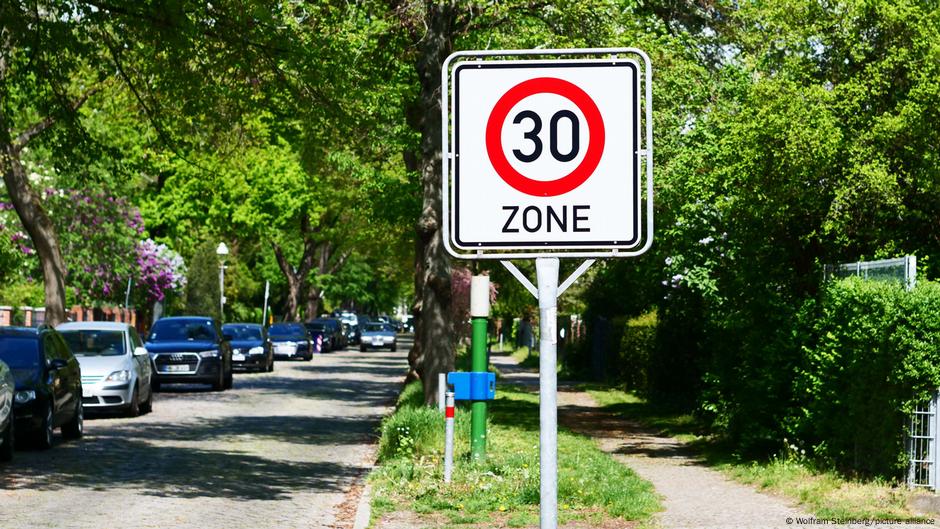
    setting lower speed limits,
    promoting more public transport as well as electric vehicles and cycle paths.

    The EEA report says action needs to be taken at both the EU and national level, recommending improved access to quiet and green spaces in cities, as well as measures such as using low noise tires, regular rail maintenance to smooth tracks and optimizing aircraft take-off and landing patterns.

    It says without additional regulatory or legislative action, the EU is unlikely to reach existing targets aiming for a 30% reduction in the number of people chronically disturbed by transport noise by 2030.


    Edited by: Tamsin Walker

    Author: Holly Young

  • What Happened When I Stopped Taking Mounjaro After 5 Months of Transforming My Body

    What Happened When I Stopped Taking Mounjaro After 5 Months of Transforming My Body


    • READ MORE:  Weight loss jab now linked to more than 100 deaths

    A mother who saw instant success on the ‘King Kong’ weightloss jab Mounjaro said she was left looking like ‘Skeletor’ when she stopped using the injections.

    Ellen Ogley, 42, from Yorkshire, weighed 16st 12lbs and was a size 18 at her heaviest.

    While she lost 3st on an ‘unsustainable diet’ she turned to the
    weight loss
    medication Mounjaro in May last year to try and transform her body.

    The mother-of-three said it had an instant effect and stopped her incessant raiding of the snack cupboard.


    ‘I thought it was going to be another diet trend but the food noises got switched off,’ said Ms Ogley, who used the injections for five months.

    ‘As soon as I went on it I realised “I’ve not touched the snack cupboard”.’

    This change helped her make healthier choices in other aspects of her life and she started exercising.

    Soon the nursery manager had lost a further 3st, taking her down to a total body weight of around 10st.


    However, she said the process of weaning off the drug came with a worrying side effect.

    Mrs Ogley recalled how, in coming off the jab, she became obsessed with getting as ‘skinny as possible’.

    ‘I got trolled, they called me Skeletor. I was being told I looked like a 60-year-old,’ she said.

    Skeletor is the name of a skull-faced villain from the 80s children’s cartoon He-Man and the Masters of the Universe.

    Losing muscle mass is known side-effect of weight loss jabs as well as other rapid weight loss methods.

    While dieters lose fat, they can also shed muscle if they consume very few calories and fail to perform muscle-building exercises.

    It was nasty social media comments, alongside Mrs Ogley’s husband’s concerns that she looked ‘ill’,  that gave the wake-up call she needed.

    Mrs Ogley took up weight training and said this—combined with some healthy swaps—had a made a world of difference.

    ‘I have abs at 42—it blows my mind,’ she said.

    ‘I have hacks in place. If I’m craving sweets I have [high protein] Greek yoghurt, berries and granola.’

    ‘I still have takeaways but I exercise portion control.

    ‘We make chicken kebabs as fakeaways instead of ordering them as takeaways.’

    She said making these swaps and cutting back on alcohol had helped prevent the weight from coming back.

    A study,
    published last month
    , warned that many patients using weight loss jabs risk piling the pounds back on within 10 months of quitting the injections.

    Scientists at Oxford University discovered the effects of GLP-1 drugs like Wegovy are short-lived if patients do not maintain a healthy lifestyle afterwards.

    Mrs Ogley said she hopes her example shows others they can maintain their weight loss if they stop using the drugs.

    She said she’d battled comfort eating and binge drinking after being diagnosed with cervical and ovarian cancer in 2023.

    ‘I’d have two to three takeaways a week. My drinking was excessive,’ she said, adding that she’d often share three bottles wine with her husband on an evening out.

    ‘It

    helped numb everything.’

    As part of her cancer treatment, she was forced to undergo a hysterectomy—a major surgery to remove the uterus—but it was recommended she lost weight before going under the knife, to reduce the risk of complications.


    ‘I said to myself “if I come out the other side I will try and take control of my health”,’ she said.


    While she started with an highly restrictive fasting diet that helped her lose 3st she knew it wasn’t sustainable.

    ‘I was doing it in not a very healthy way,’ she said.

    ‘I was almost starving myself.’

    This was when she turned to Mounjaro.

    As of Monday, obese patients in England will be able to access the ‘revolutionary’ weight-loss jab Mounjaro—free of charge—
    directly from their family doctor
    .

    Mounjaro, also known as tirzepatide, will be offered to around 220,000 people over the next three years under new
    NHS
    prescribing rules.

    GPs can now prescribe the drug to patients with a BMI over 40—classed as severely obese—and at least four obesity-related health conditions, such as type 2 diabetes, high blood pressure or sleep apnoea.

    Mounjaro is a  weekly jab that can help patients shed up to a fifth of their body weight in a year.

    More than a million people in the UK are already using it via private clinics, where it costs around £250 a month.

    However, until now, only a limited number of patients could access it on the NHS via specialist weight-management services.

    Read more

  • GTEC DG Explores Innovations at Family Health University

    GTEC DG Explores Innovations at Family Health University

    Director-General (DG) of the Ghana Tertiary Education Commission (GTEC), Professor Ahmed Jinapor Abdulai, has paid an informal visit to Family Health University (FHU), to observe the institution’s progress since receiving its Presidential Charter.

    The visit was hosted by FHU’s Founder and Vice-Chancellor, Professor Enyonam Yao Kwawukume and Dr. Susu Bridget Kwawukume, Founder and Chief Medical Director of Family Health Hospital. They welcomed the GTEC Director-General, with gratitude, highlighting how meaningful the visit was to the institution, and expressed their heartfelt appreciation for GTEC’s unwavering support over the years.

    Senior Members present at the meeting included the Pro-Vice Chancellor, Professor Philip Odonkor; the Registrar, Mrs. Rita Kaine; Dean of the Medical School, Dr. Sylvester Yaw Oppong; Acting Dean of the School of Nursing and Midwifery, Dr. Augustina Ofori-Asamoah; GEMP Coordinator, Professor Festus Adzaku; Director of Academics and Students Affairs, Dr. Emmanuel Labram; the immediate past Dean of the Medical School, Dr. Charles Fleischer-Djoleto; the Hospital Administrator, Madam Joana Agyare, and the Matron of the Hospital, Madam Veronica Amedo.

    In his remarks, the GTEC Director-General commended the university’s “massive speed of development within a short time,” praising it as evidence of visionary leadership, a strong governing board, and a highly qualified faculty. He noted that FHU’s rapid growth and innovation affirmed its prestigious status as Ghana’s first private chartered university with a medical school.

    Prof. Kwawukume also shed light on FHU’s contributions to global healthcare, particularly its hallmark bloodless fibroid surgical method, now gaining attention from global health bodies such as the World Health Organisation (WHO).

    In the area of public health, Prof. Kwawukume reiterated FHU’s commitment to research, and pledged to eliminate cervical cancer in the Teshie-Nungua enclave within five years. He also expressed heartfelt condolences on the loss of Professor Timothy R.B. Johnson, a founding mentor whose role in shaping FHU’s success was invaluable. A newly named e-library on campus now bears his name in honour.

    The visit also sparked critical discussions on policy. Dr. Sylvester Yaw Oppong, the Dean of the Medical School, made a passionate appeal for government support in the form of tax rebates for medical equipment, and also advocated for the extension of fee waivers for first-year students in private chartered universities, emphasising national equity in education.

    Looking to the future, FHU announced its commitment to explore AI-assisted health technologies through local partnerships to enhance medical education and healthcare delivery.

    The GTEC Director reaffirmed the Commission’s support for private science-based universities, noting that many private institutions are not profit-driven but face challenges that require national support.

    The visit concluded with a campus tour, including stops at the ultra-modern emergency wards, dialysis unit, cadaver lodge, lecture halls, the university library, and the e-library. Prof. Abdulai also engaged with students, spoke briefly about the work of GTEC, and encouraged them to study diligently.

    The visit marks a renewed chapter of collaboration between FHU and GTEC, reinforcing the role of visionary private institutions in Ghana’s tertiary and healthcare education space.

    The post
    GTEC DG Visits Family Health University
    appeared first on
    DailyGuide Network
    .

    Provided by SyndiGate Media Inc. (
    Syndigate.info
    ).

  • Global Fund Now Purchasing Kenyan-Made Antimalarial Drugs

    Global Fund Now Purchasing Kenyan-Made Antimalarial Drugs


    A batch of life-saving Kenyan-manufactured antimalarial drugs, sulfadoxine-pyrimethamine plus amodiaquine (SPAQ), is on its way to protect millions of children in Mali.


    Manufactured by Universal Corporation Limited (UCL), a Kenyan pharmaceutical company based in Kikuyu, the seven million-dose consignment will be the first-ever Global Fund procurement from an African manufacturer.


    The medicines will be supplied to Mali through the Seasonal Malaria Chemoprevention (SMC) programme, which provides key interventions used to protect millions of children under five from malaria each year during the rainy season.


    Malaria, a life-threatening disease spread to humans by female Anopheles mosquitoes is mostly found in tropical countries. Despite it being highly preventable and curable, it remains among the leading killer diseases, especially in sub-Saharan Africa, with children under the age of five bearing the brunt.


    In 2023, According to the World Health Organization (WHO), 267 million malaria cases and 597,000 deaths were in 2023 in the region.


    “The WHO African Region continues to carry a disproportionately high share of the global malaria burden. In 2023 the Region was home to about 94 per cent of all malaria cases and 95 per cent of deaths. Children under five years of age accounted for about 76 per cent of all malaria deaths in the Region,” WHO said in a statement on December 11, 2024.


    Historically, malaria medicines used in different programs across the continent are sourced mostly from European or Asian manufacturers.


    However despite playing a key role in reducing the severity of the disease over the years, this strategy left the region vulnerable to some external shocks and supply delays.


    With technical support from Medicines for Malaria Venture (MMV), and an Indian-based company, Rena, UCL obtained WHO prequalification of, SPAQ in 2023, becoming the first manufacturer to do so, and earlier this year in May, the factory penned history after receiving a major procurement order from the Global Fund.


    The Global Fund, which is formally known as The Global Fund to Fight AIDS, Tuberculosis, and Malaria, is a partnership that mobilises resources, from donors and other partners to combat these three diseases, especially in counties that have been most affected.


    With the UCL-produced drugs, each of Mali’s 1.8 million children will receive four preventive doses, significantly reducing their risk of falling ill or dying from malaria, throughout the rainy season.


    According to Perviz Nadhani, UCL’s managing director, in a briefing this month, there is an urgent need for collective effort between the government and the private sector to elevate regional drug manufacturing.


    Nadhani affirmed that the move will be pivotal in cushioning the continent against other emerging pressures such as new diseases, strained global funding, extreme weather events, biological threats including insecticide and drug resistance, and inequalities in access to care.


    “This is a win for the continent, not just Kenya or Mali. We are proud to show that African manufacturers can meet global standards and deliver for African communities,” said Dhanani.


    He spoke on Friday during a high-level visit convened by UCL, and Medicines for Malaria Venture (MMV), at the Kikuyu-based plant.


    Representatives from the Africa Centres for Disease Control and Prevention (Africa CDC), the WHO, the African Leaders Malaria Alliance (ALMA) and leading research and policy institutions also joined the visit.


    Martin Fitchet, CEO of MMV, asserted that the prequalification and procurement of the drugs will be key to setting the pace for other African manufacturers to meet global standards and reinforce the continent’s pharmaceutical capacity.


    “Africa bears the heaviest burden of malaria, and it must have the capacity to supply its life-saving solutions. Our collaboration with UCL is part of a broader effort gathering momentum, to localize production and unlock regional manufacturing ecosystems,” Fitchet said.

    Provided by SyndiGate Media Inc. (
    Syndigate.info
    ).

  • Dermot Murnaghan, 67, Shares Heartbreaking Prostate Cancer Diagnosis

    Dermot Murnaghan, 67, Shares Heartbreaking Prostate Cancer Diagnosis

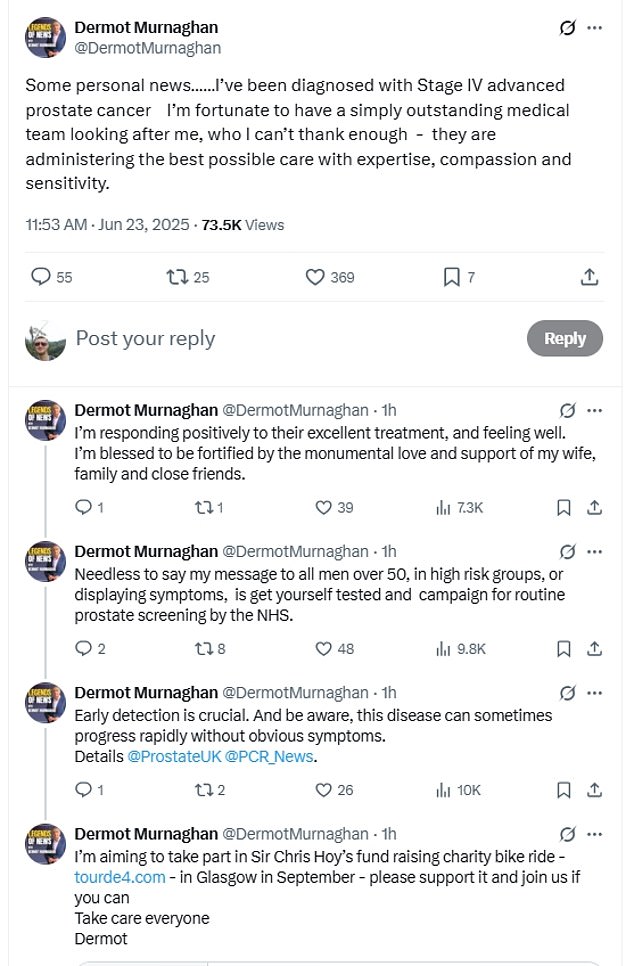
    Newsreader Dermot Murnaghan today revealed he has been diagnosed with ‘advanced’ stage four prostate
    cancer
    .

    The former
    Sky News
    and
    BBC
    broadcaster has said he is ‘feeling well’ despite the devastating news.

    ‘I’m blessed to be fortified by the monumental love and support of my wife, family and close friends’, he said today.

    Stage four is the most advanced stage of cancer, meaning cancerous cells have spread beyond the prostate and into other areas of the body. In these cases it is generally not curable, but it can treatable.

    The 67-year-old, who has been married to his wife Maria for almost 36 years and has four children, revealed his diagnosis on
    Twitter
    this afternoon.

    ‘I’ve been diagnosed with stage four advanced prostate cancer I’m fortunate to have a simply outstanding medical team looking after me, who I can’t thank enough – they are administering the best possible care with expertise, compassion and sensitivity’, he wrote.

    ‘I’m responding positively to their excellent treatment, and feeling well’.

    Mr Murnaghan also issued a plea to men to get tested, especially if they are aged over 50, in high-risk groups or have symptoms. The Mail is campaigning for a national prostate cancer screening programme for high-risk men, similar to that for breast cancer, which could prevent hundreds of deaths.


    He also said that he is aiming to take part in Sir Chris Hoy’s fundraising charity bike ride in September which will raise awareness and funds for cancer charities across the UK.

    The Olympian announced he had a terminal diagnosis for prostate cancer in October 2024.

    The Tour de 4 ride, which will begin and end at the Sir Chris Hoy velodrome in Glasgow on September 7, aims to change the perception of people living with stage four cancer.

    Mr Murnaghan said today: ‘Needless to say my message to all men over 50, in high risk groups, or displaying symptoms, is get yourself tested and campaign for routine prostate screening by the NHS.

    ‘Early detection is crucial. And be aware, this disease can sometimes progress rapidly without obvious symptoms’.

    NHS guidance says men over the age of 50 are at highest risk of developing prostate cancer, but Sir Chris wants to help men get screened earlier.

    About one in eight men will get prostate cancer in their lifetime, according to the charity Prostate Cancer UK, and the disease often has no symptoms in its earlier stages.

    Dermot left Sky after more than 15 years in 2023.

    Before joining Sky News, Murnaghan presented ITV’s News At Ten and the BBC Ten O’Clock News – now known as BBC News At Ten – as well as Channel 4 News.

    Murnaghan has also hosted the BBC’s quiz programme Eggheads.

    While at Sky News he was the journalist who announced the death of Queen Elizabeth II outside Buckingham Palace as well as numerous elections in the UK and the US

    .


    He began his career as a trainee reporter at local newspapers before joining Channel 4 as a researcher. He later became a reporter for the broadcaster’s The Business Programme.

    After a brief stint in Switzerland to present the European Business Channel,  Mr Murnaghan returned to Britain to host the business segments on The Channel 4 Daily, a new breakfast show by Channel 4.

    He then made the move to ITV in the early 1990s, where in 1997 he broke the news of the death of Princess Diana.

    The veteran journalist switched broadcasters again in the early 2000s, joining BBC Breakfast as one of the lead presenters from 2002 to 2007.

    Dermot formed a very popular partnership with Natasha Kaplinsky.

    He was also a regular fixture on the six o’clock and ten o’clock news.

    He moved to Sky News in October 2007, where he has remained until his final show almost 16 years later.

    Away from news, he presented the popular BBC quiz, Eggheads.

    Murnaghan presents true crime documentary series Killer Britain and the podcast Legends Of News.


    In 2017 the newsreader was ‘wiped out’ by a driver while he was cycling.

    The accident, which he described as a ‘hit-and-run’, left him with a number of cuts and bruises as well as a damaged bike.

    He shared the image of his injured face on social media with the caption: ‘This is why I haven’t been on the air for two days.’

    Speaking to Sky News, he

    said afterwards: ‘On an empty road in north London a guy in a car on a mobile phone pulled out from the side of the road without indicating.

    ‘I swerved that, but a millisecond later he U-turned into me and wiped me out.’

    Mr Murnaghan, who is an avid cyclist, explained that he had woken up at 6am to go cycling with friends before work and had been wearing a hi-vis jacket.

    He said: ‘Twenty minutes later I was lying by the side of the road with a broken cycle helmet and a hobbled bike, still spinning, lights shining – and a variety of cuts, bruises and abrasions, but thankfully no broken bones.’

    Read more

  • Race Against the Fields: Challenge Farmers’ Stoicism with Swim, Run, and Cycle

    Race Against the Fields: Challenge Farmers’ Stoicism with Swim, Run, and Cycle

    A brother and sister from a farming family that lost loved ones to suicide say there is “a lot of work to be done” to address depression in the industry and stop stoicism preventing farmers asking for help.

    Hugh Addison and his younger sister Alex Addison plan to cycle, run and swim the 340 miles (550km) from the west coast of Ireland to Tynemouth on the north-east of England coast in just four days.

    Mr Addison, originally from Kings Meaburn near Penrith, Cumbria, said the route “ties together our family story” because their mother and her brother were born in Ireland.

    The 34-year-old said their uncle took his own life when they were young and “the shadow of that” affected their childhood.

    Farming still had “one of the highest suicide rates out of any profession”, Mr Addison said.

    “Some of the factors that we have to deal with day to day, including climate change, political policy, economics of farming itself, all make it a very challenging place to be,” he said.

    “Farming does have this stoicism about ‘you’ve just got to knuckle down and get through this’ which is amazing from a resilience point of view, less good when you actually want to talk to somebody about things or express your feelings in a healthy way.”

    The Royal Agricultural Benevolent Institution (RABI), which provides mental health support services for farmers who may be struggling with anxiety or depression, said the most recent available survey data
    suggested more than a third of the farming community
    had “mental wellbeing scores that are sufficiently low to cause concern”.

    Its report from 2021 also suggested nearly half experienced anxiety.

    The siblings want to raise money and awareness with what they are calling their Borderline Challenge, which is due to start with a 140-mile (225km) bike ride from Sligo to Donaghadee in September.

    With the help of four friends they intend to relay-swim the 22-mile (35km) stretch of the Irish sea to Port Patrick, returning to bikes to reach Carlisle.

    They will run the final 70-mile (115km) stretch along Hadrian’s Wall to the North East coast.

    Mr Addison, a medical engineer, said the particular route was important.

    “Through Northern Ireland, the south of Scotland and the north of England, it ties together our family story,” he said.

    “We’ve had some incidences that have been very close to home.

    “We unfortunately lost our uncle to suicide when we were much younger and the shadow of that has really informed our childhood.”

    Miss Addison, a 29-year-old marketing executive, said she had been sceptical.

    “My initial thought was ‘he’s an idiot’,” she said.

    “Second thought was ‘this sounds amazing, I definitely want to do it’.

    “To be able to do a really once-in-a-lifetime experience across places which mean so much to myself and family was an incredible opportunity.”

    Miss Addison is hoping the challenge will spark an important conversation in the farming community.

    “Encouraging people that you can show vulnerability and then also reach out and ask for help is equally admirable as just keeping calm and carrying on,” she said.

    Mr Addison said he would consider the challenge a success if he could change “just a little bit” anyone’s idea they had to “suffer in silence”.

    “The passing of my uncle has really been one of the motivators for us doing this challenge,” he said.

    “It’s been a taboo subject that we really haven’t spoken about a lot as a family and I think that has its own influence.”


    Follow NewsCumbria on


    X


    ,


    Facebook


    ,


    Nextdoor


    and


    Instagram


    .

    More on this topic

    • ‘So many farmers struggle with mental health’
    • Survey looks at women’s mental health in farming
  • BoyCode Conference: Precious Eniayekan Assembles Top Mentors for Young Boys

    BoyCode Conference: Precious Eniayekan Assembles Top Mentors for Young Boys

    The 2025 edition of the BoyCode Conference has once again proved that the boy child needs mentoring, and that was addressed as thousands of boys hit The Stable, Union Bank Sports Centre, Bode Thomas, Surulere, Lagos, on June 14 to learn at the feet of elders.

    In partnership with Union Bank, Sunbeth, Vesti and Lafarge, the conference also drew together a host of prominent leaders, creatives, and thinkers who united in one message: empowering the boy child is vital to building a more balanced, compassionate, and prosperous society.

    The conference, convened by Precious Eniayekan, brought together an esteemed lineup of speakers, including comedy legend Ali Baba, renowned music producer ID Cabasa, the Lagos State Commissioner for Youth and Social Development, Mobolaji Ogunlende, and thought leaders such as Olakunle Soriyan, John Obidi, Ayo Bankole Akintujoye, David Aliu, Eric Gugua, and Omoruyi Edoigiawerie.

    In her welcome address, Eniayekan described the BoyCode Conference as a transformative movement aimed at redefining masculinity and reshaping narratives around the boy child in Africa.

    “The BoyCode Conference isn’t just a gathering; it is a seminal moment in our continent’s story,” Precious stated.

    “We convene today because we believe that African boys, when empowered, mentored, and anchored by purpose, can redefine masculinity, reshape legacy, and lead with empathy and brilliance.”

    Delivering one of the most captivating speeches of the day, Ali Baba challenged the young men in attendance to embrace responsibility, personal growth, and value-driven living.

    “Every boy must be a man. If you fail to be a man, you are less than a man,” he said.

    Ali Baba highlighted essential qualities for successful manhood, listing goals, education, technology, mentorship, health, relationships, information, and self-improvement as foundational pillars.

    He urged the youth to embrace daily personal development and to leverage every lesson learned at the conference.

    “Everything you’ve learned here today, put it on your wall. Look at it every day. Measure your growth with it,” he advised.

    “And remember, every client you meet should become a friend, that’s how you do better business.”

    In a moving keynote, Mobolaji Ogunlende, Lagos State Commissioner for Youth and Social Development, emphasized the often-overlooked emotional burdens faced by boys in society.

    He challenged long-held cultural norms that discourage boys from expressing vulnerability.

    “Society makes us think that because we are men, we should not cry,” Ogunlende said. “A lot of boys are suffering from mental health issues, but we don’t know, because they can’t cry.”

    Ogunlende pointed out how harmful stereotypes, such as toxic masculinity, place pressure on boys to suppress their emotions, leading to mental health challenges and, in some cases, poor life choices such as fraud or crime.

    “By giving a voice to the boy child, we can challenge harmful stereotypes and create space for boys to express themselves authentically,” he added.

    He advocated for a holistic support system that encourages emotional intelligence, positive role models, inclusive education, and empathetic parenting as means to empower boys to thrive and contribute meaningfully to their communities.

    ID Cabasa, on his part, delivered a raw and introspective keynote that challenged conventional wisdom about intergenerational learning.

    “Most of us, what we need to be creative have been beaten out of our lives, while we are growing,” he told the packed audience. “So most of the things we are passing to the next generation might not be useful to them.”

    The acclaimed producer, known for his work with top Nigerian artists, drew from personal experience to illustrate how trauma can inadvertently shape parenting decisions.

    In a groundbreaking discussion on masculinity, ID Cabasa redefined ego not as toxic masculinity, but as a coping mechanism for insecurity. “Ego is anytime anything is going to expose that thing that I’m insecure about,” he explained. “It’s actually a way for you to hide the many, many cravings that you have.”

    He challenged young men to embrace vulnerability, questioning societal norms that prevent men from expressing emotions or showing affection. “Where did we learn that men should not hug themselves?” he asked, encouraging the audience to examine unconscious biases about masculine behavior.

    Other speakers echoed similar sentiments, focusing on the need for mentorship, leadership, self-awareness, and societal reform in how young boys are nurtured across the continent.

    From entrepreneurship to mental health, each presentation reinforced the core message that empowered boys become responsible, emotionally balanced, and visionary men.

    The BoyCode Conference 2025 concluded with a renewed call to action: for educators, parents, governments, and communities to collaborate in nurturing a generation of emotionally intelligent, purpose-driven young men.

    As Eniayekan put it, “This is more than a conference, it is a blueprint for change.”

    NB: The conference can be watched

    here.

    Provided by SyndiGate Media Inc. (
    Syndigate.info
    ).